09ART / HISTORY / DESIGN READ THE ARTICLE
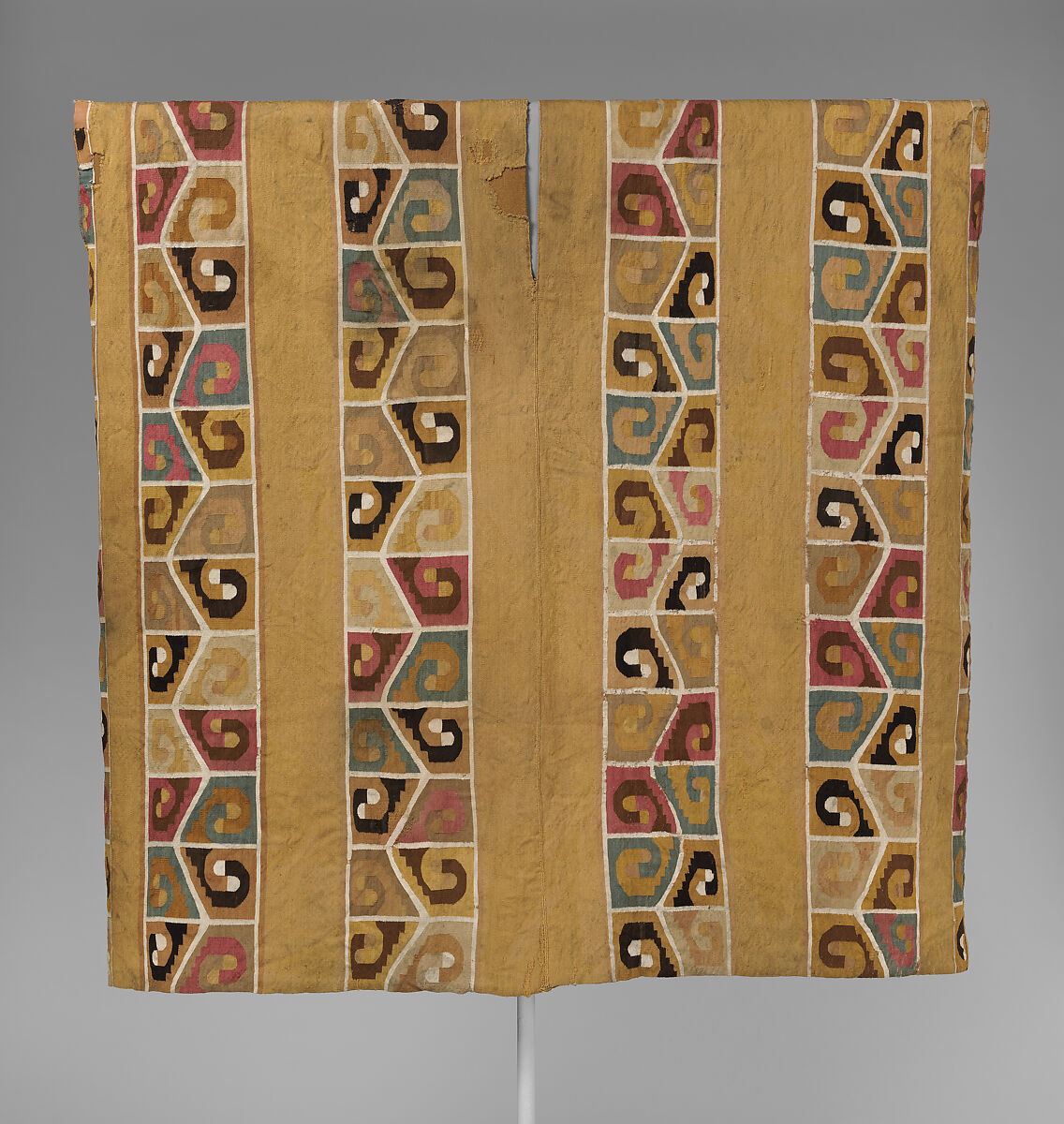
Modern art went to learn at the loom
What Anni Albers found in the textiles of ancient Peru — and why that history changes the way we look at abstraction.
 LAID BARE JOURNAL
What Anni Albers found in the textiles of ancient Peru — and why that history changes the way we look at abstraction.
READ THE ARTICLEProjects, images, stories and discoveries in fashion, art, design, architecture and culture. Each edition brings things into a conversation we may not have considered before.
A lace dress, an installation in Doha, and knowledge that needs to pass from one person to another.
EXPLORE THIS EDITION ↗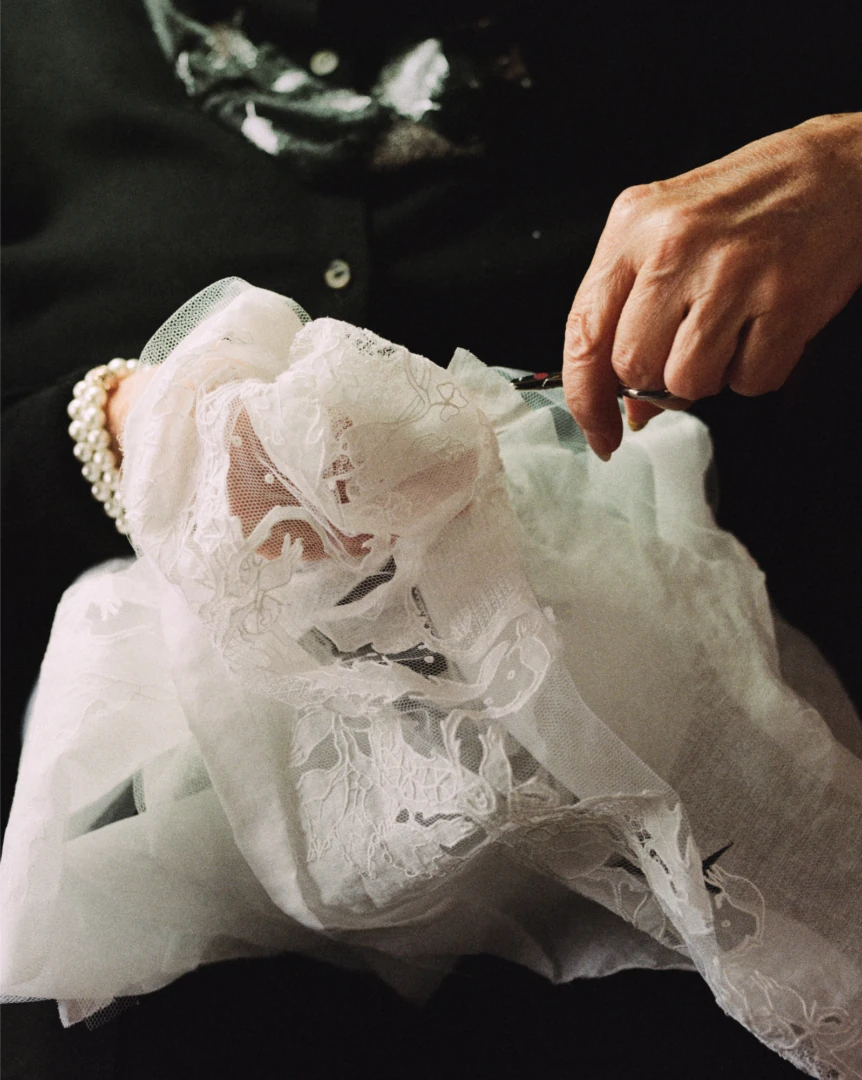
The Journal’s latest stories, in conversation with our Instagram posts. The archive brings together every article, with images, references and sources.
What Anni Albers found in the textiles of ancient Peru — and why that history changes the way we look at abstraction.
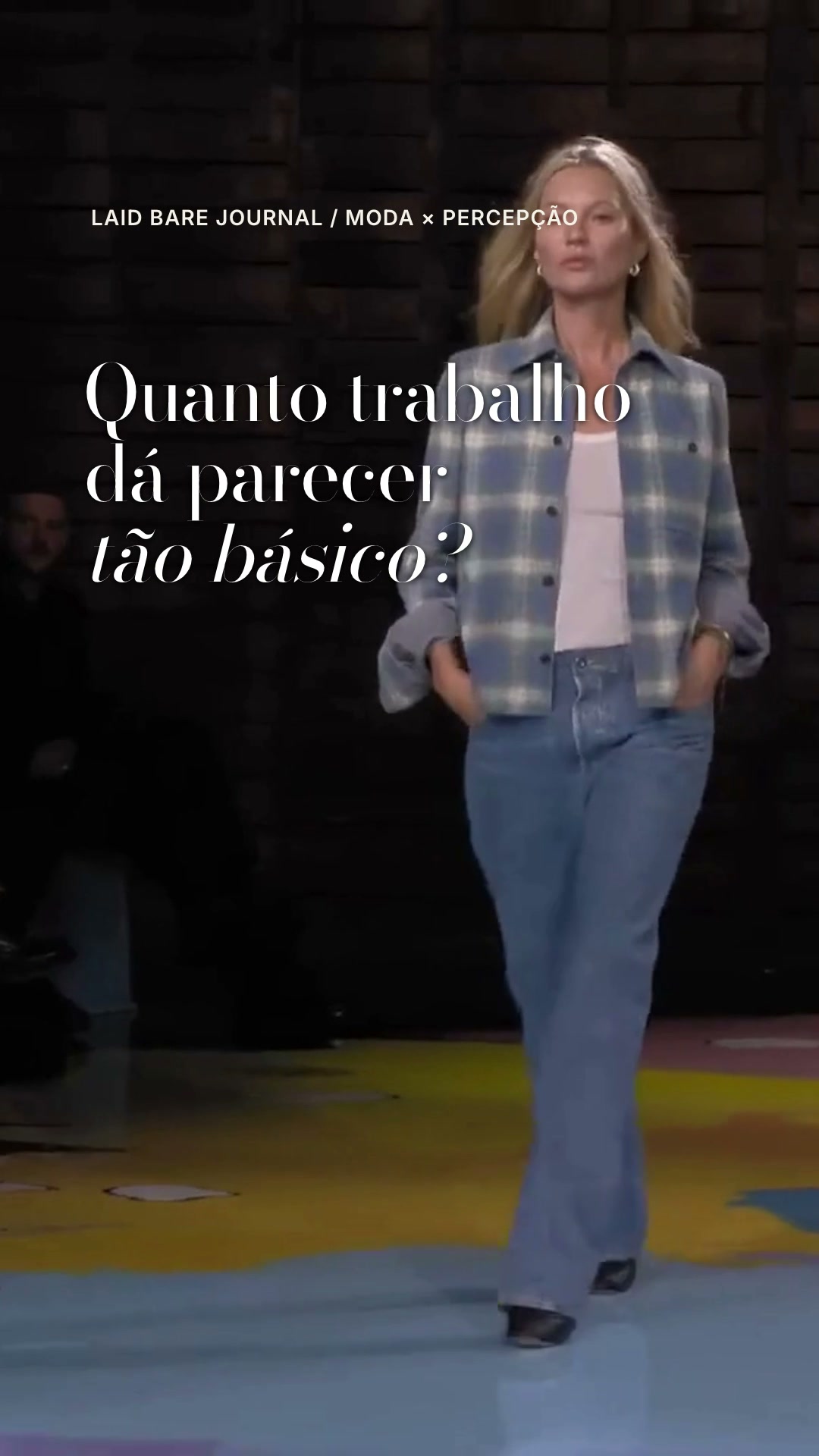
A flannel shirt and jeans, at first glance. Leather in both garments. Kate Moss’s Bottega Veneta look shows how much work can sit behind what we call basic.
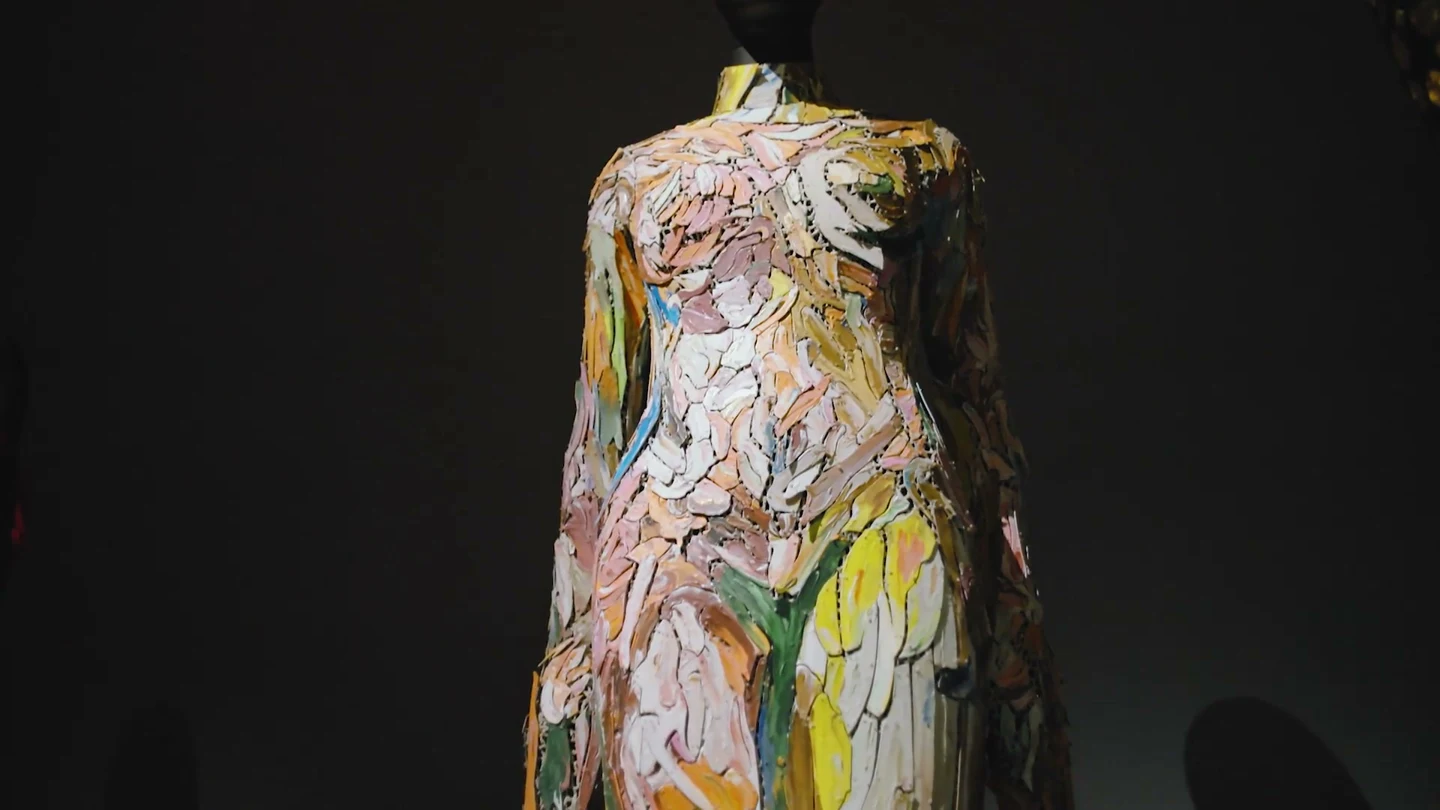
Brushstrokes become embroidery, geometry becomes pattern cutting, and drawers become pockets. When fashion and art meet, the body joins the creative process.
From Katharine Hamnett to Brazilian runways: how clothes can give dissent a voice and bring a cause into the conversation.
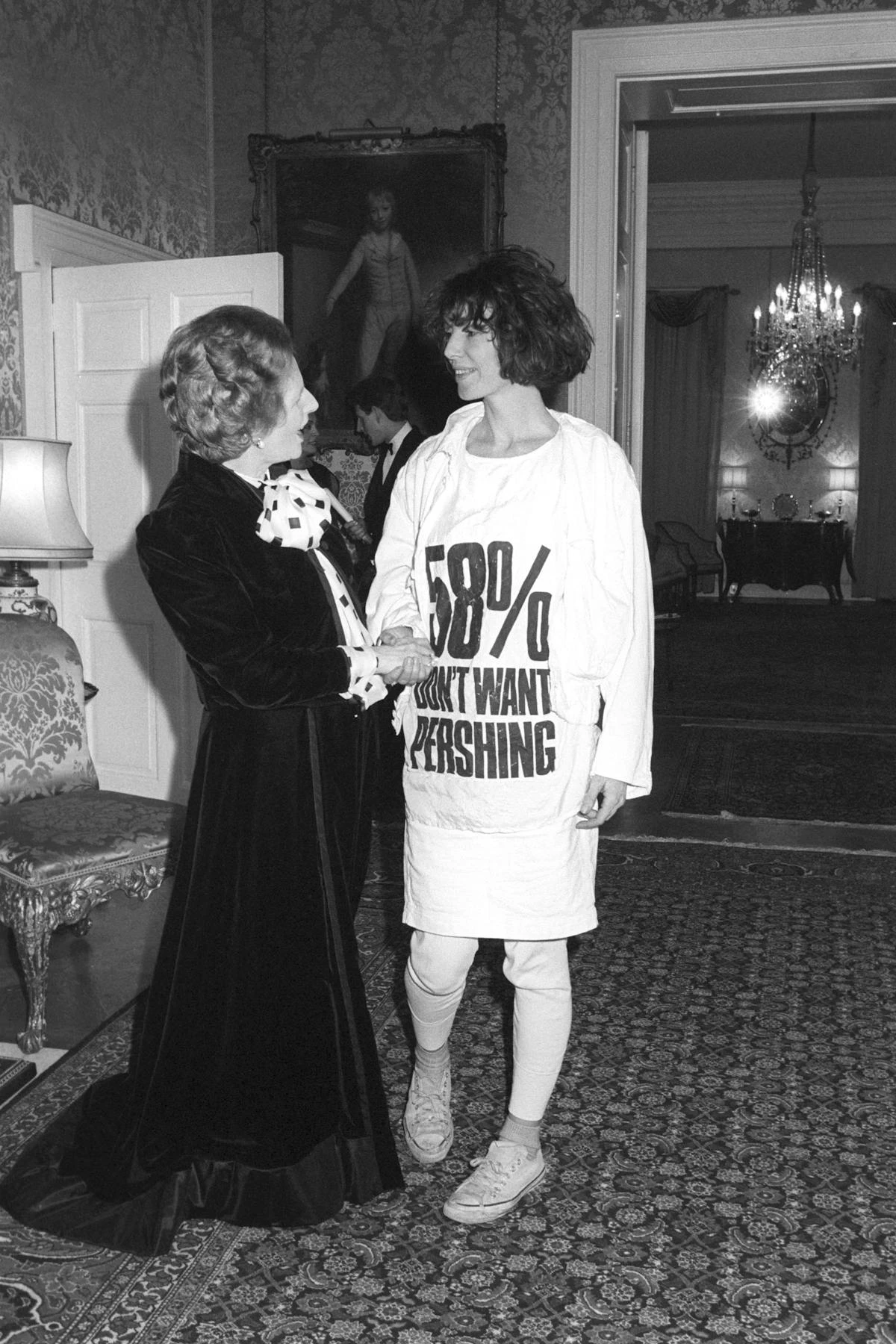 Katharine Hamnett / Margaret Thatcher, 1984. Press Association / Creative Review.
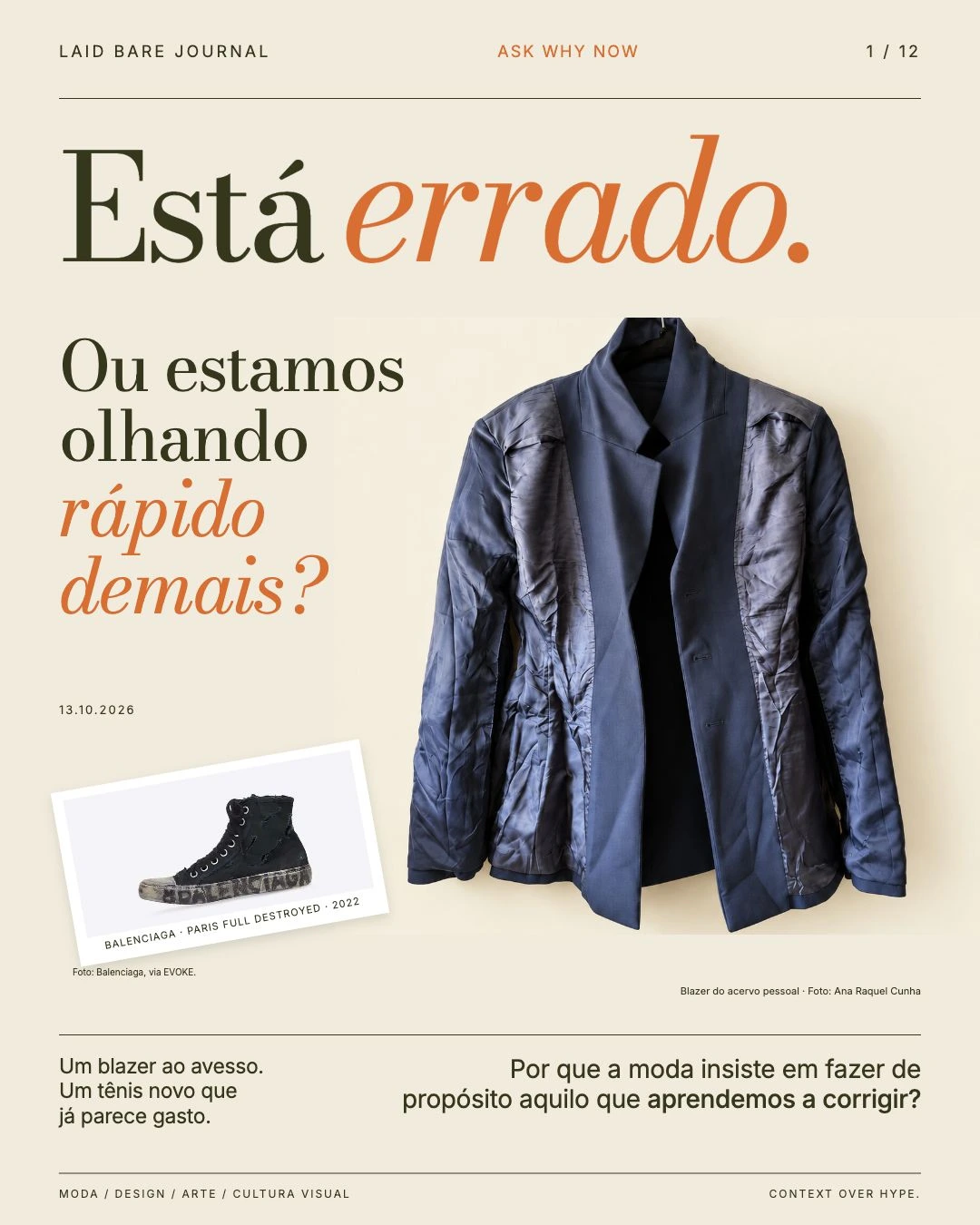
Fallen straps, clothes that seem badly put on, and trainers that arrive looking used. Fashion does it on purpose. We can ask why.
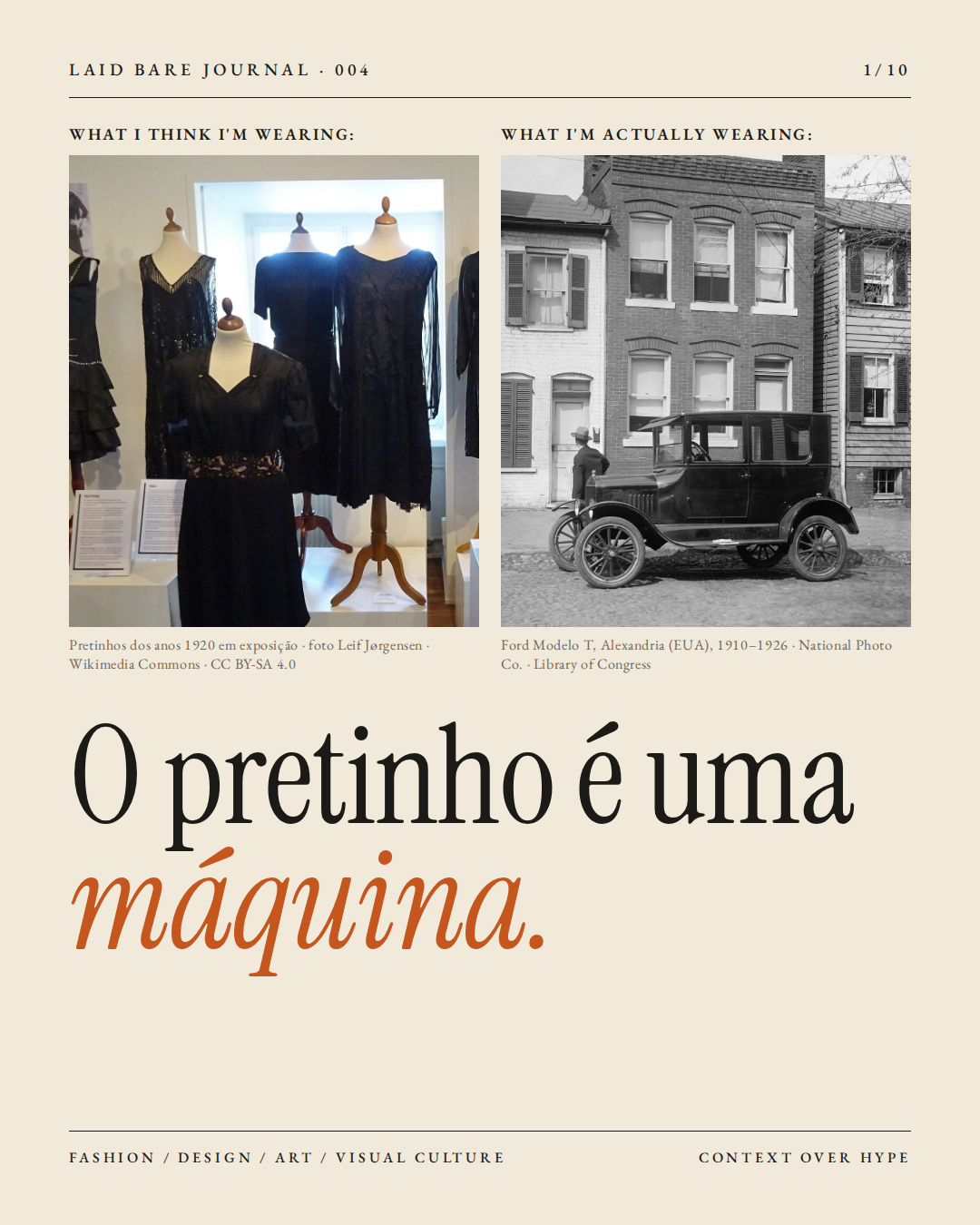
A dress, a car and a bare building. Or: how simplicity became a virtue, and who profited from it.
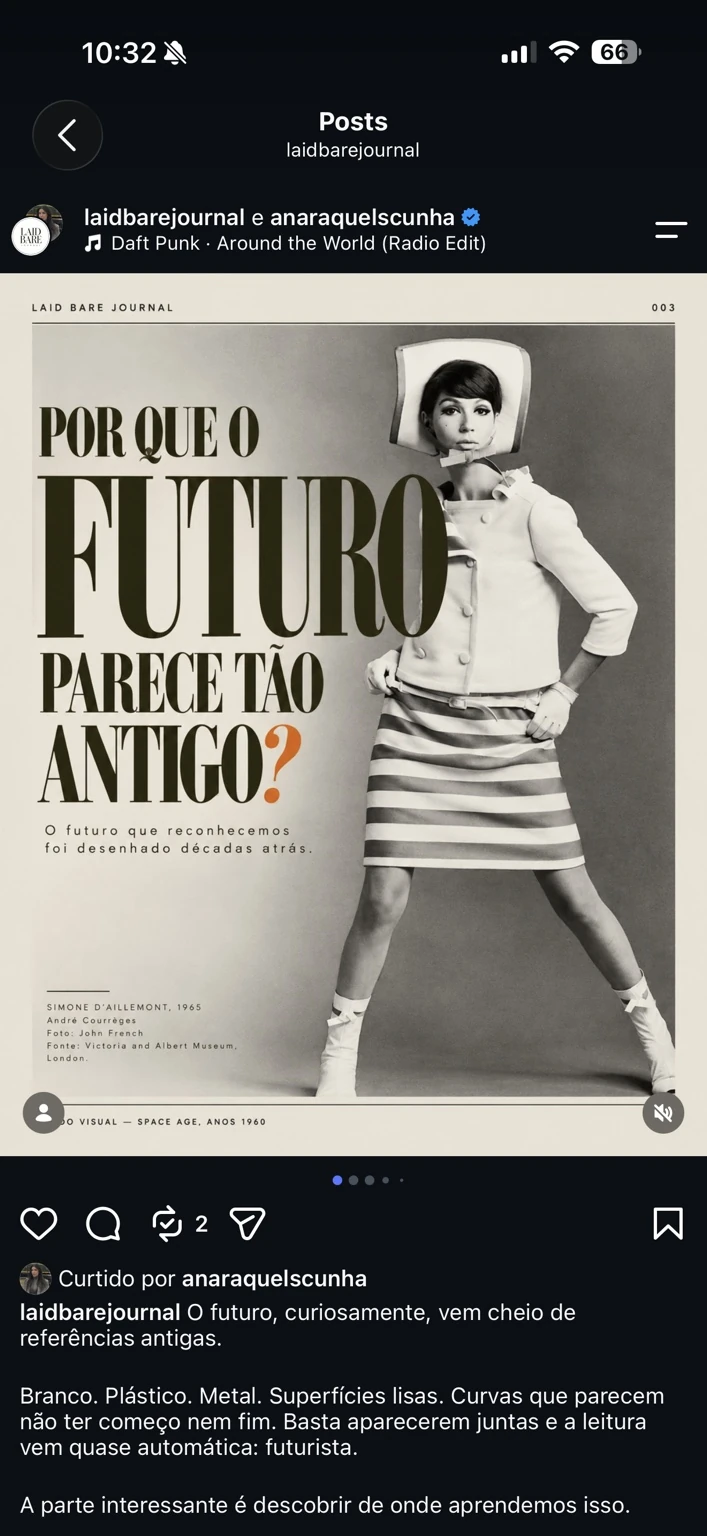
Why does what we call “futuristic” still look so much like an idea from sixty years ago?
What we wear. And how clothes change the way we move through the world.
What we create, desire and choose to keep.
The places we inhabit and the ideas they make possible.
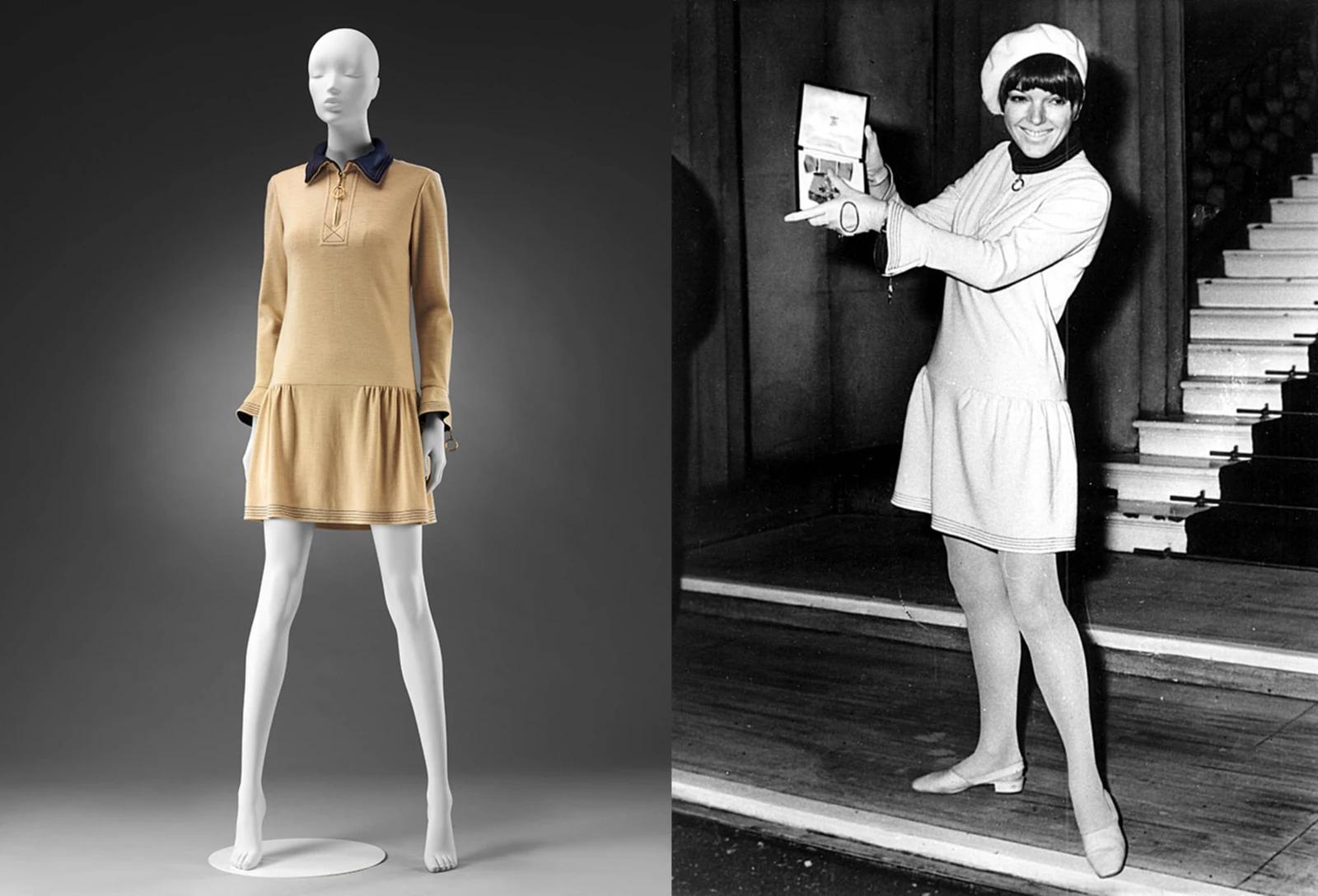
In 1966, Mary Quant went to Buckingham Palace to receive her OBE wearing a minidress she had designed herself. The jersey, simple lines and hem above the knee stood apart from the ceremony around her. The photograph records more than a famous outfit: it shows an aesthetic born in London’s streets and shops entering a place of tradition on its own terms.
Get Laid Bare Letters: stories and references from fashion, art, design, architecture and culture, delivered to your inbox. Every so often, when there’s something worth taking your time with.
Laid Bare Journal began with an unease: the feeling that culture is becoming too fast, too superficial. We’re not here to repeat passing trends or dictate what’s “in” or “out”. We want to uncover the unseen connections between fashion, design, art, architecture and culture. We slow down to lay bare the creative processes that shape our time. If you’re looking for more meaning and less noise, this is your place.
CURATED BY ANA RAQUEL CUNHA