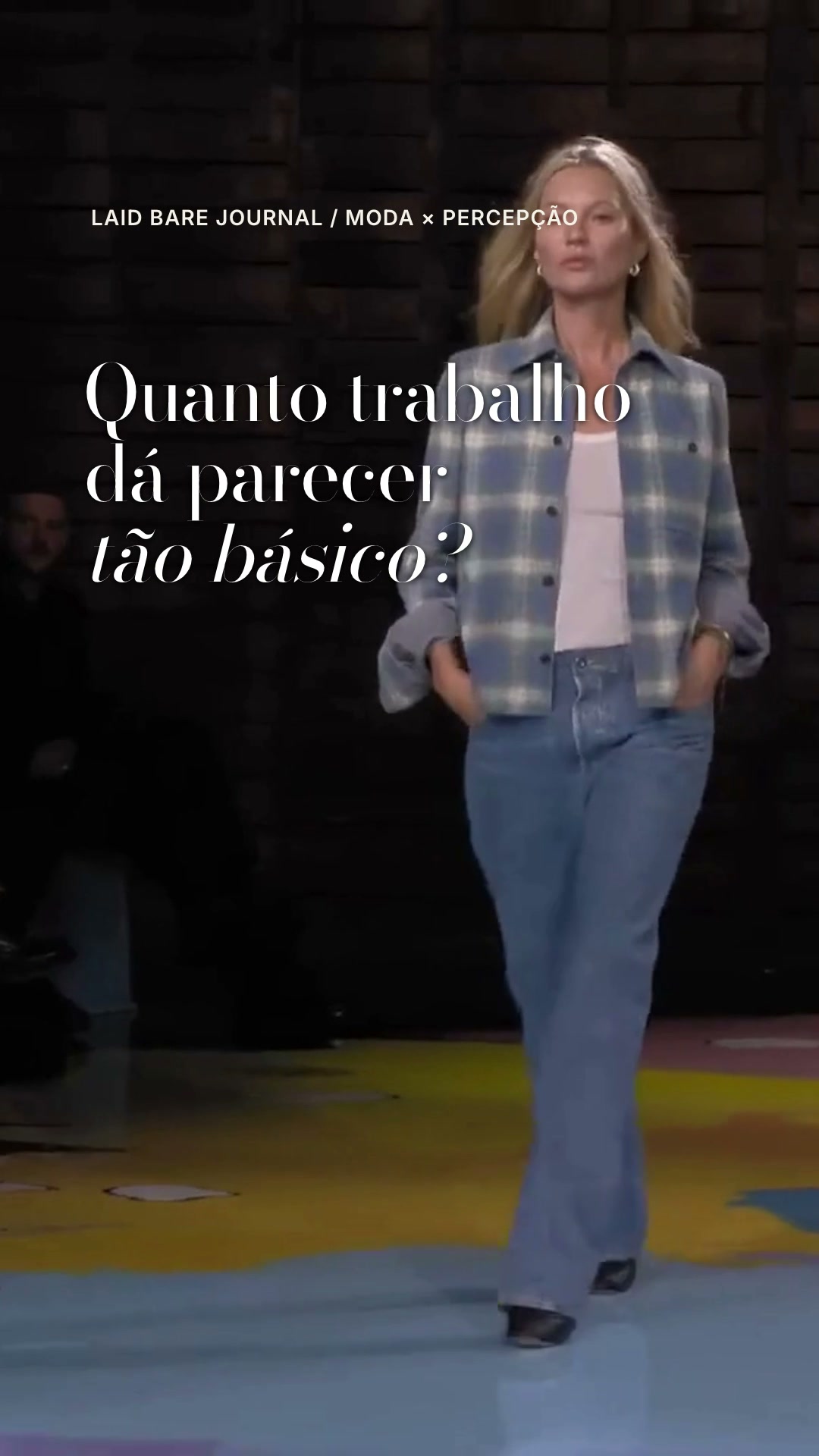

Kate Moss walked out in a checked shirt and jeans. The eye had settled the outfit before the clothes had a chance to explain themselves.
It was Bottega Veneta’s Summer 2023 collection, designed by Matthieu Blazy. The shirt and trousers were leather. Printing gave their surfaces the appearance of cloth. Familiar clothes that make us admit, a moment later, that we looked too quickly.
The illusion works on both sides of the waist. In the shirt, leather imitates checked flannel; in the trousers, it imitates denim, with the blue colour and worn appearance we expect from jeans. The outfit seems to combine two fabrics. It combines two ways of disguising leather.
The revelation is a good surprise. The more interesting question comes afterwards: why put leather through so much work to make it look like an ordinary shirt and jeans?
The eye reads labels. Even when there isn’t one.
Before we identify a brand, we recognise categories: flannel shirt, jeans, weekend clothes. Recognition is useful. Nobody stops to check the composition of every sleeve passing on the street.
Trompe-l’œil, French for “fool the eye”, works with that confidence. A surface supplies enough clues for us to recognise a material that is not there.
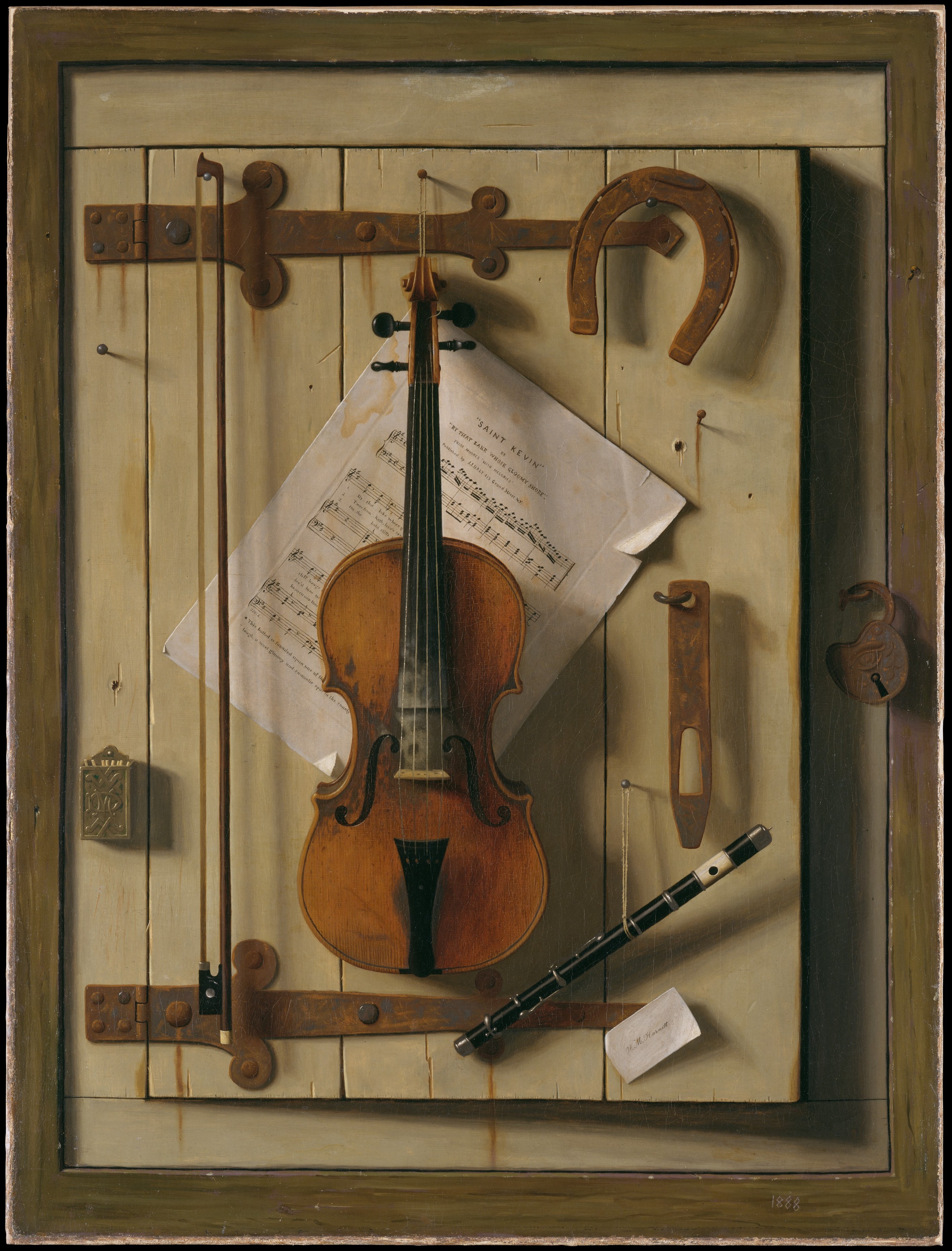
In Still Life—Violin and Music, painted in 1888, William Michael Harnett makes paint resemble wood, paper and metal. A torn corner of the sheet music appears to lift from the surface; objects cast convincing shadows. The Met’s commentary identifies craftsmanship as part of what the painting seeks to make visible. The Met — collection record and commentary
Both garments perform a comparable operation on a different support: leather takes on the appearance of cloth. This does not establish a direct influence of Harnett on Blazy. It connects two ways of constructing a material illusion, in which technique becomes noticeable precisely when we realise we have been fooled.
Twelve print layers for the eye to say “flannel”.
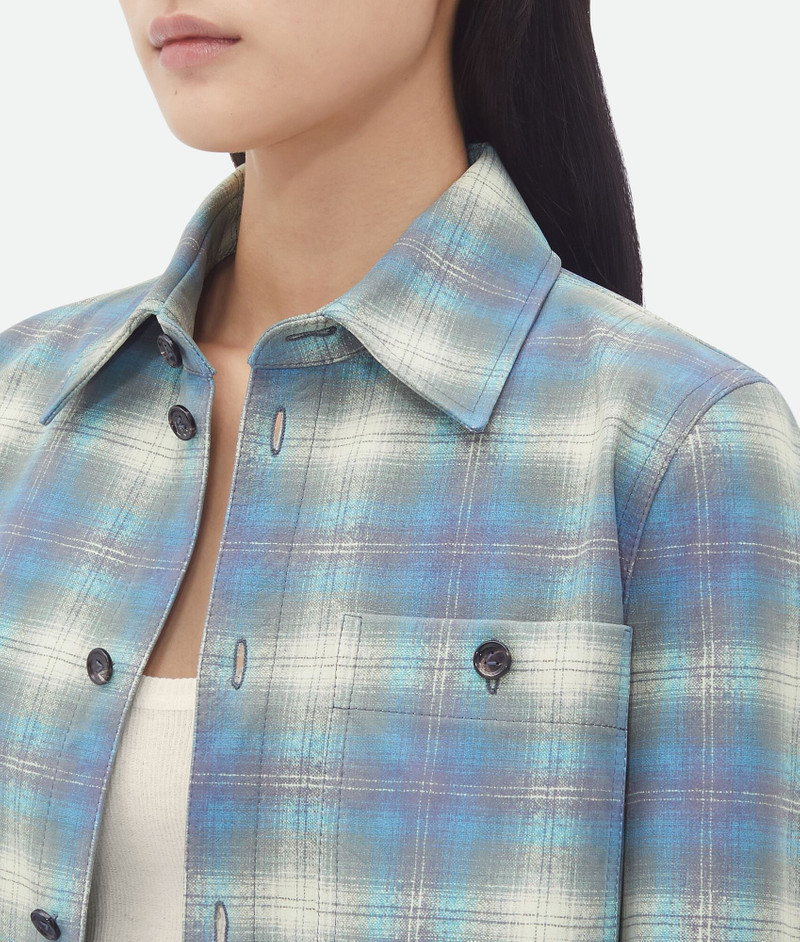
According to Vogue’s backstage report, the shirt worn by Kate required twelve layers of printing to achieve the depth of colour Blazy wanted. The designer described the proposition as “perverse banality”. Vogue — show report and Blazy’s comments
The twelve layers are a figure reported specifically for the shirt. The trousers also use printed leather to create the illusion of cloth; the report does not give the same number of applications for them.
The number refers to printing, not twelve hides stacked together. The distinction matters: the effect reproduces an appearance, rather than turning leather into a weave of threads.
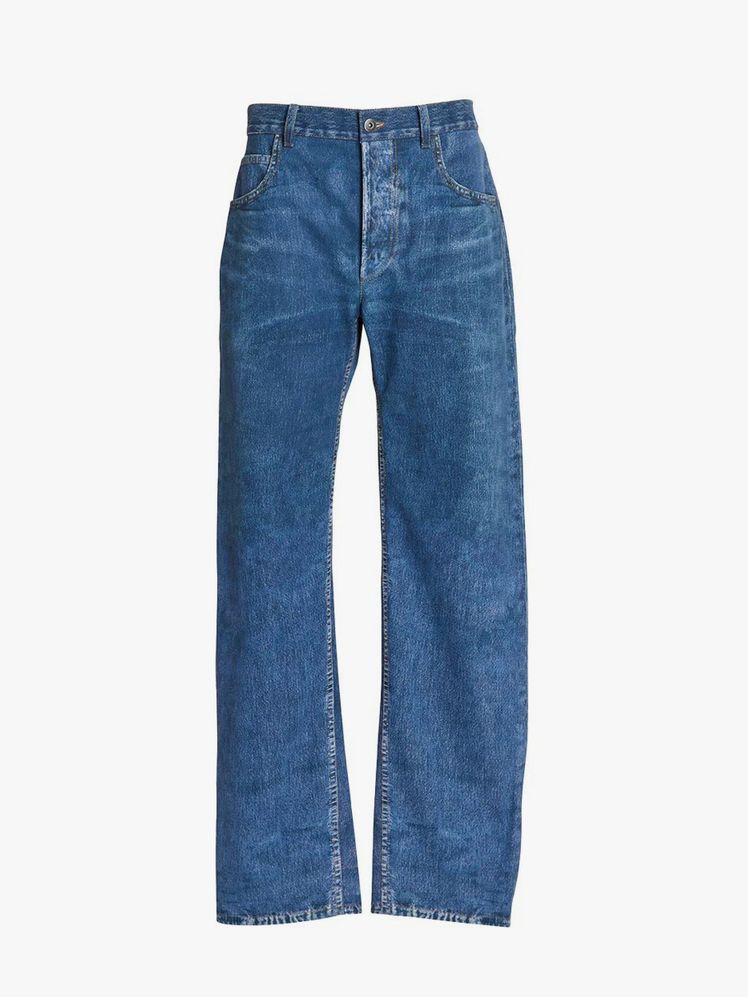
In the trousers, familiarity lies in the faded blue and shifts in tone we associate with worn jeans. A recognisable appearance of cotton is recreated on leather. FWRD describes reference 713843‑V2BC0‑4600 as 100% cow leather on the outside, with cotton pocket lining. FWRD — composition and reference
What we can examine is the result: the checks, their colour transitions and the appearance of a weave on a leather garment. That knowledge changes the question. Beyond “what shirt is this?”, we can ask “which decisions made this material look like another?”.
Luxury wants to look at ease.
There is a particular joke in these clothes. Their elaborate making works, at a distance, to disappear. The effort shows up in the technical description; on the runway, it looks as though someone simply picked up a shirt.
The design relies on familiarity. Without our recognition of flannel and denim, there would still be printed clothes, but the trick would lose some of its force. Our memory of ordinary garments takes part in the design: what we already know how to wear helps produce the surprise.
The discussion allows a more precise look at basics. A garment can have a familiar shape and a complex construction. It can also be straightforward to manufacture and extraordinary because of how somebody wears it. Appearance, making and meaning do not always arrive as a package.
In Laid Bare’s reading, Blazy’s provocation lies in the distance between what the eye recognises and what had to be made. The brand’s prestige adds another layer to the experience. No printer applies that one.
The technique explains the prints. What about the prices?
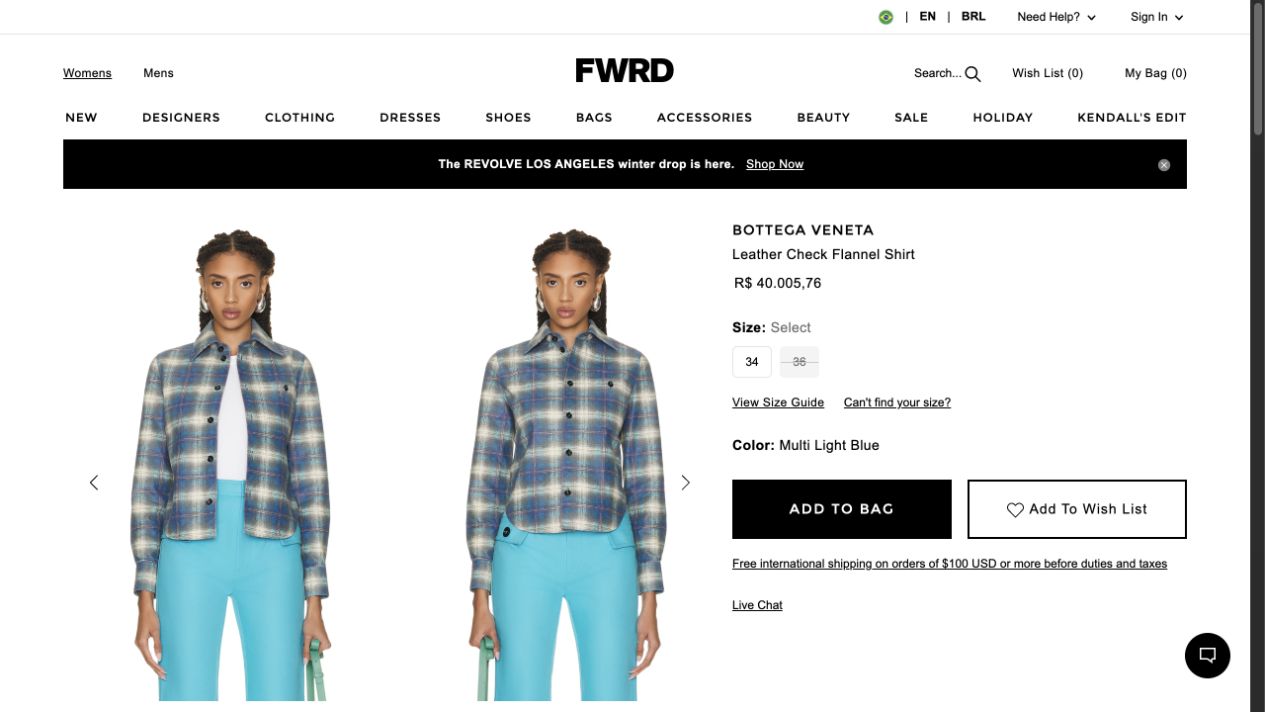
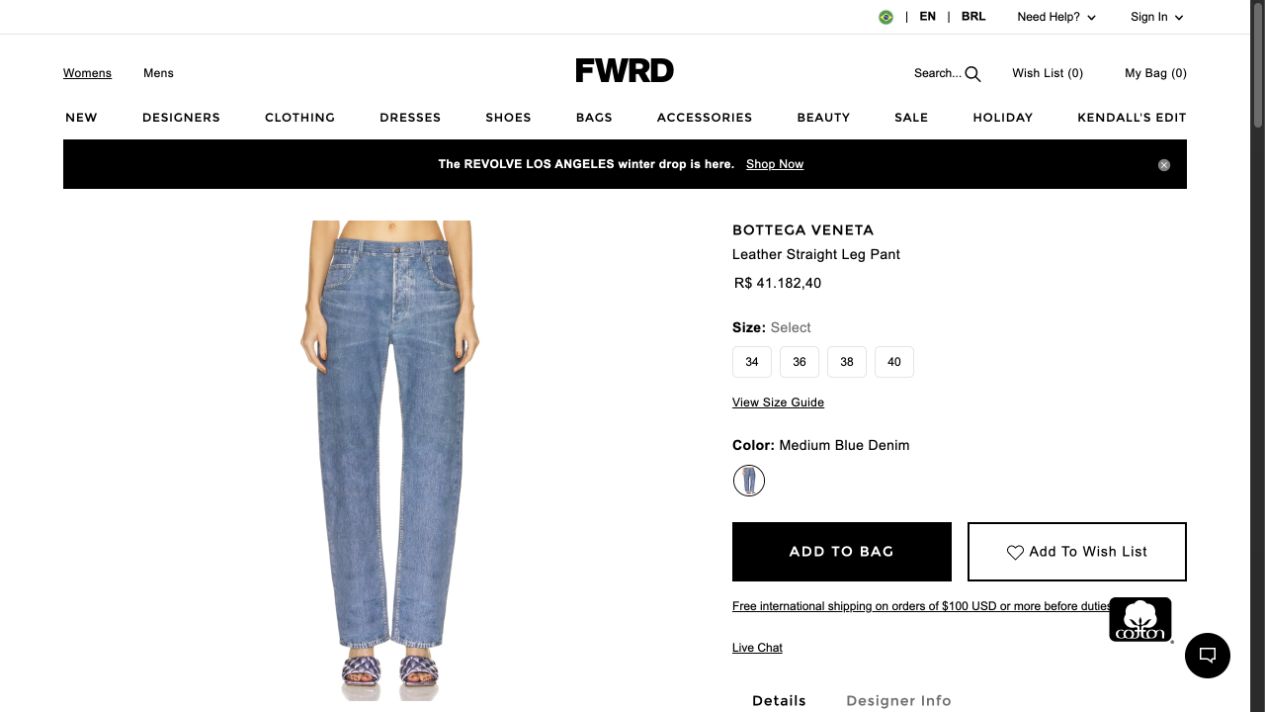
In these records, the shirt is listed at R$40,005.76 and the trousers at R$41,182.40. These are FWRD’s advertised prices on the dates indicated, rather than original runway prices. We have two retail labels, not the garments’ cost breakdowns.
Twelve layers of printing do not establish the cost of each application, how much paid labour went into the garment or what share of the price belongs to the name Bottega Veneta. The number helps explain the visual effect. It does not settle the bill.
There are at least three different questions here: how the garment was made; what it comes to mean in a collection and on a body; and how much somebody will pay for it. The answers are related, but they are not interchangeable.
Impressive execution deserves attention. Willingness to pay is another conversation. We can recognise a garment’s intelligence without handing the brand our judgement about its price.
The same look, after the information.
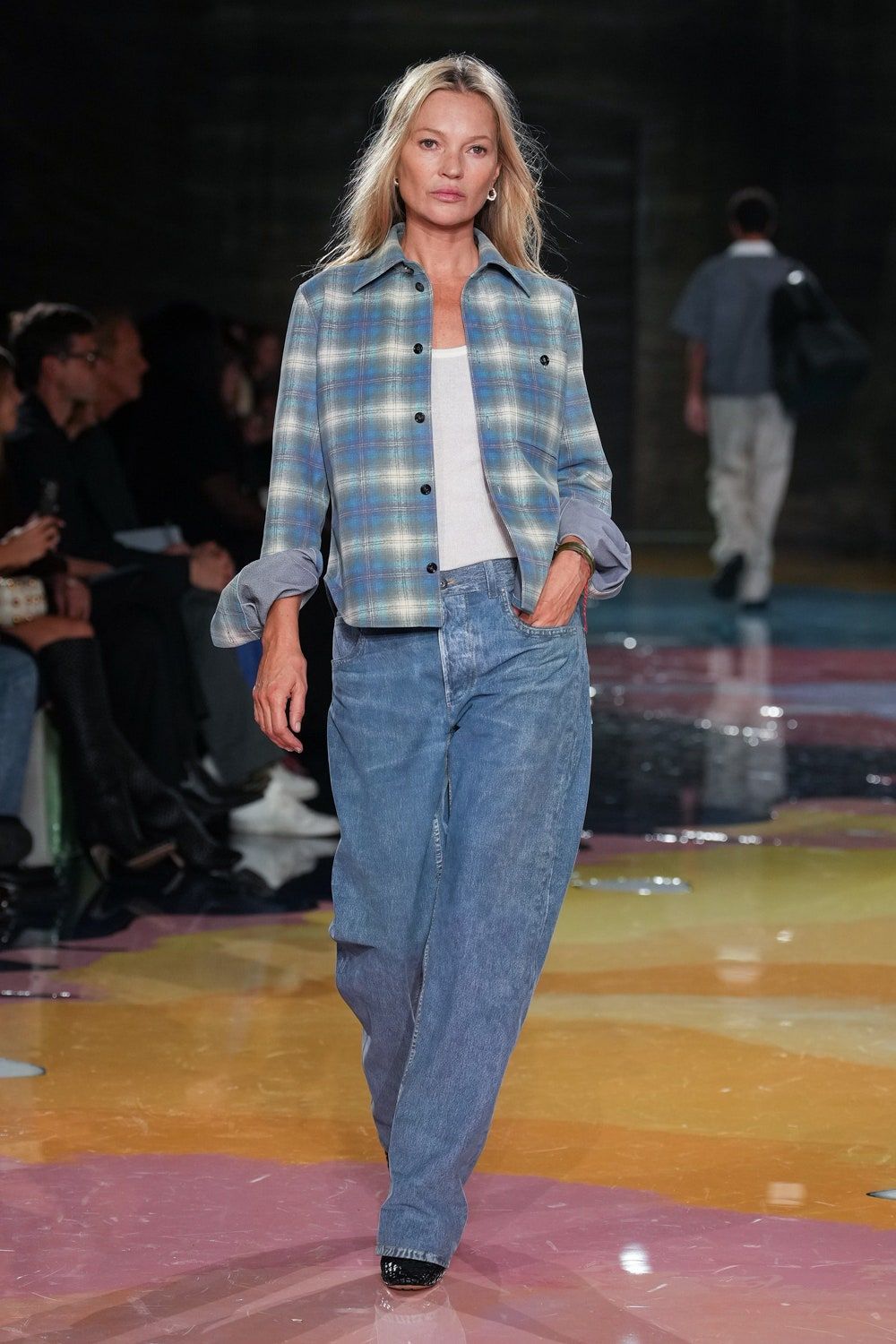
Look at the image again. The clothes have not changed. What you know about them has.
You might now admire the work, find the result excessively understated, or decide that the surprise is more interesting than the clothes. None of those responses has to arrive ready-made from the runway.
The useful distinction is between what we see, what we learn about construction and the prestige we attach to a name. When everything collapses into one impression of “luxury”, it becomes difficult to identify what caught our interest in the first place.
If it only becomes interesting after you discover the brand, perhaps the trick isn’t in the leather.