
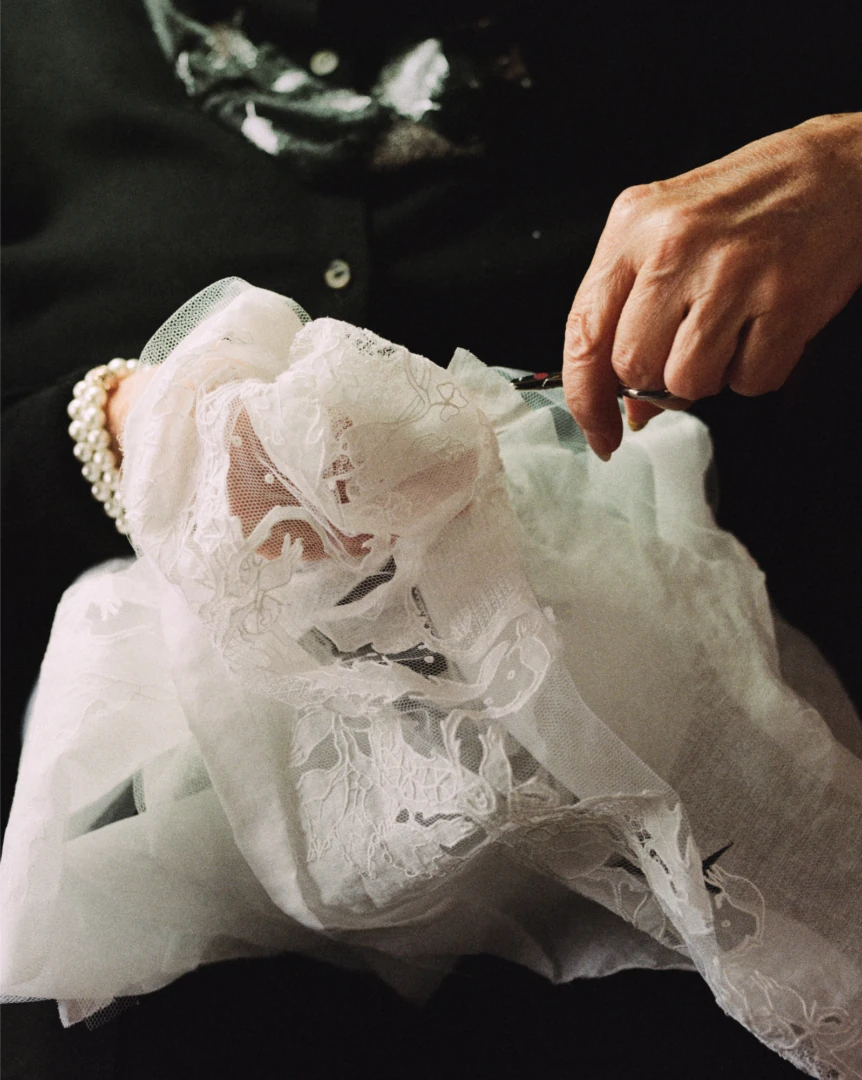
To learn lacemaking with Ann McMahon, you first have to learn how to hold the work.
Ann tells journalist Deirdre McQuillan this in The Irish Times. It is a practical way into a conversation about heritage: before admiring the delicacy, it helps to work out where to put your fingers. The Irish Times ↗
A photograph can show a stitch in extraordinarily high resolution. Learning to make it still means handling the material, noticing what went wrong and finding a way to put it right. The finished object holds the outcome of decisions we can no longer follow.
It is possible, then, to conserve a dress and lose the ability to make another. Two exhibitions on show this month and a lacemaking demonstration in Natal help reveal what is at stake.
The maker thinks, too
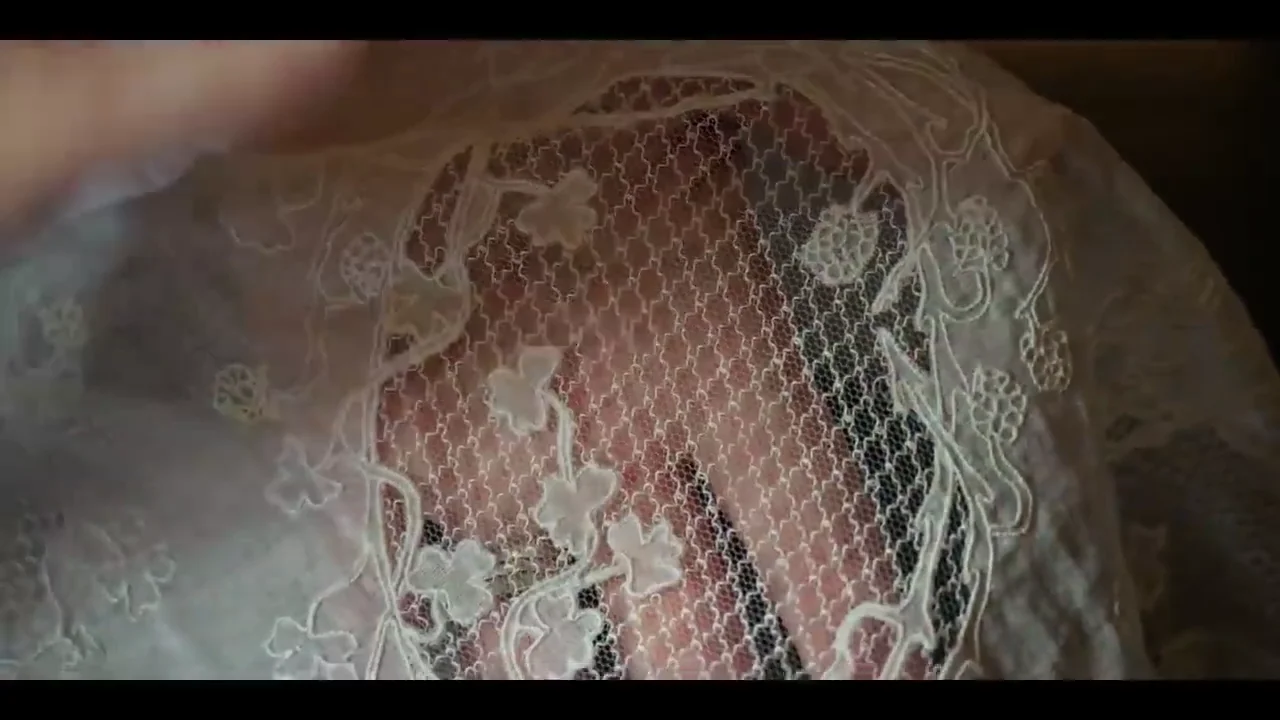
At the National Museum of Ireland in Dublin, an exhibition that opened on 11 November presents a Carrickmacross lace dress by Standing Ground. Michael Stewart drew the motifs; lacemakers from County Monaghan translated them into lace. According to the Design & Crafts Council Ireland, their execution took 4,300 hours. DCCI ↗
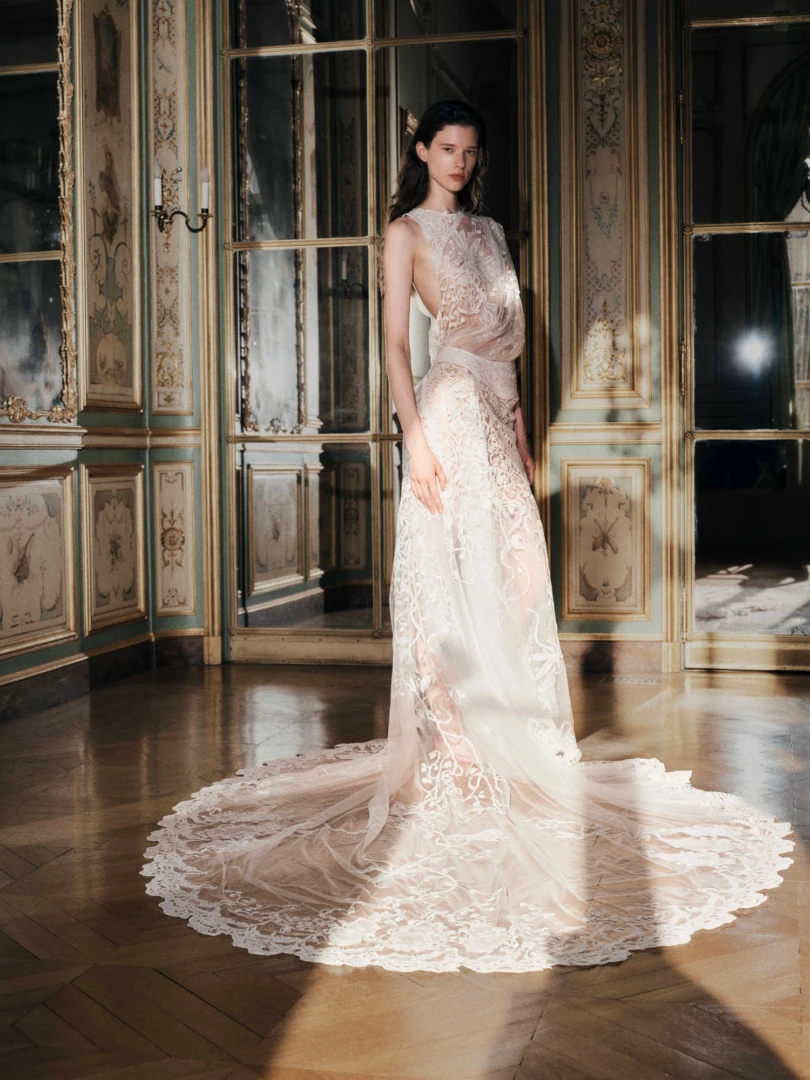
The hours suggest the scale of the work. In McQuillan’s report, lacemaker Bríd Deery emphasises that Stewart listened to the group while developing the designs. The Irish Times ↗
Listening, here, is part of designing. Someone who knows a technique from the inside can help discover what is worth trying, where an idea needs to change and which possibilities the drawing has yet to recognise.
When we reduce these people to “skilled hands”, we leave out a fairly important part of them.
The seam belongs in the story
In the dress, motifs are joined by threads, bars and small plaits, in a construction without a tulle ground. Lace is also applied over the seams, contributing to the garment’s structure. DCCI ↗
That decision brings the drawing closer to what will be required to wear it. The place where two parts meet needs as much care as the flower that catches our eye.
This is another way a tradition stays relevant: someone can think with it. A repertoire of stitches provides resources for a creation that did not exist before. Learning the technique opens up those possibilities; repeating an appearance is only one of them.
It is an important distinction when we talk about preservation. A pattern, a photograph and an old garment can support learning. For knowledge to keep circulating, someone needs opportunities to practise, teach and develop their own judgement.
In Natal, the sound teaches, too
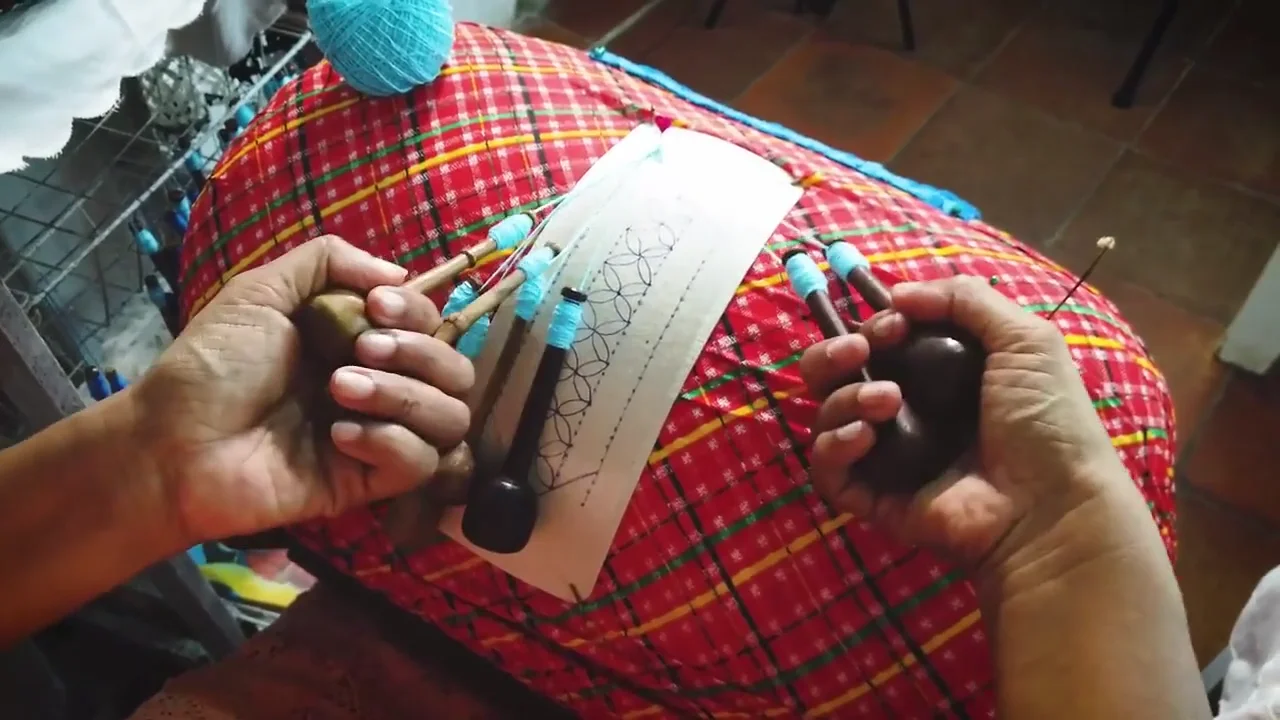
In Vila de Ponta Negra, Natal, Jane Edna Prazeres Amorim presents another way of making lace. The daughter and granddaughter of lacemakers, she works with bobbins: wooden tools carrying threads that are crossed in pairs over a pillow, following a pattern. This is a different technique from the Carrickmacross lace in the Irish dress.
In Arte do Rendar, produced by Maria Marhé and presented by the Ponto de Memória of the Rendeiras da Vila association, Jane shows what the tapping that accompanies the work does: it helps tighten the thread as the braid takes shape. The sound is part of the explanation. Arte do Rendar ↗
A pattern records the path of the threads. To follow it, the maker must also learn the movements and how to adjust the tension. Jane says she learnt by watching her mother and grandmother, and took courses to develop her skills. Her demonstration connects Natal to the conversation that began in Dublin: passing on a technique requires opportunities to watch someone who knows, try and correct.
In Doha, there is still work to do
In The Thread That Binds, by The Love Triangle Collective, construction takes place throughout the exhibition. Artisans and visitors weave together, and the space grows with the work. On show at Design Doha, the project is curated by Rana Rmeily and draws on Khous and Khaizaran, weaving traditions that use materials including palm fronds and cane. Qatar Museums ↗
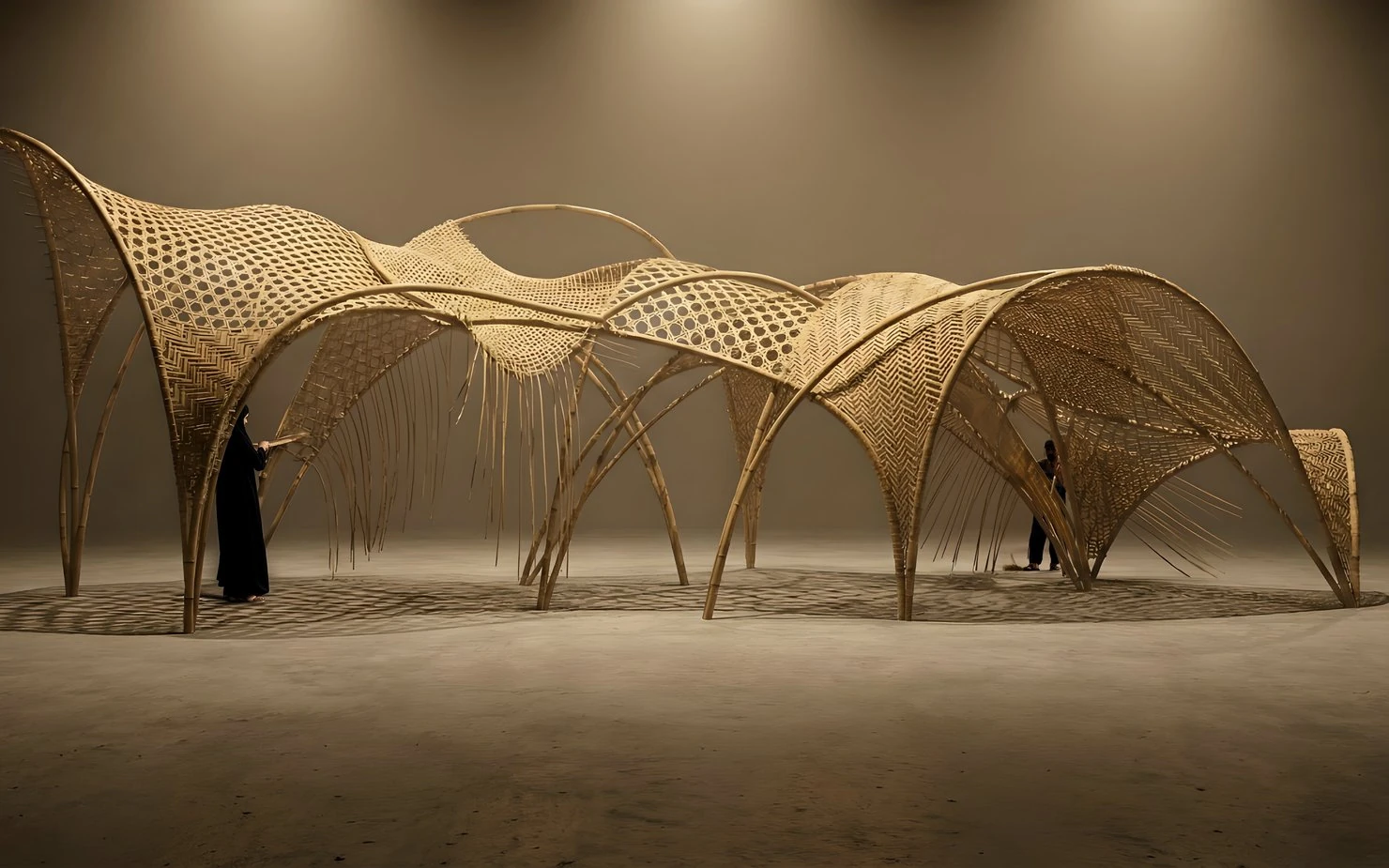
Visitors encounter the form while it is still being built. They can follow what an image of the result tends to conceal: someone working, and the time it takes for that work to progress.
A brief participation offers contact with the technique. Someone who has mastered it can guide an attempt and recognise what needs correcting. Learning means having someone to talk to about what your hand has not yet managed to do.
The piece stays. What about the knowledge?
UNESCO addresses this question through its approach to traditional craftsmanship as intangible cultural heritage. Safeguarding involves knowledge and skills, their transmission, and the possibility of continuing to practise within communities. UNESCO ↗
A museum can conserve the garment, gather documents and make room for this learning. Continuity also depends on what happens when someone picks up the material again.
Martha Hughes ironed the dress at home. It travelled to London with Natalie B Coleman in a plastic bag, McQuillan reports. The Irish Times ↗
Haute couture takes this journey, too: from someone’s table to the place where everyone will admire it. The address it came from deserves as much curiosity as its destination.
We can learn the name of the lace, recognise the collection and save the image. The next question is who will have the time, the means and the desire to learn from Ann, Bríd, Martha, Jane and so many others.
We could reach the future with the dress intact and no one able to make the next one.