
One of the most interesting things about the Mondrian dress is somewhere almost nobody looks: in the seams.
In 1965, Yves Saint Laurent presented dresses paying homage to the painter, constructed from blocks of fabric pieced together. The work was so precise that the joins virtually disappeared. The instantly recognisable geometry also helped resolve what was happening on the inside. Musée Yves Saint Laurent Paris ↗
According to the Metropolitan Museum of Art, the shaping was incorporated into the grid of seams. The adjustments needed to accommodate the body were concealed within the composition itself. The Met ↗
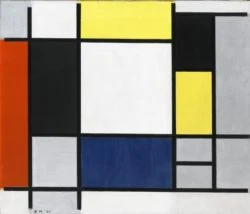
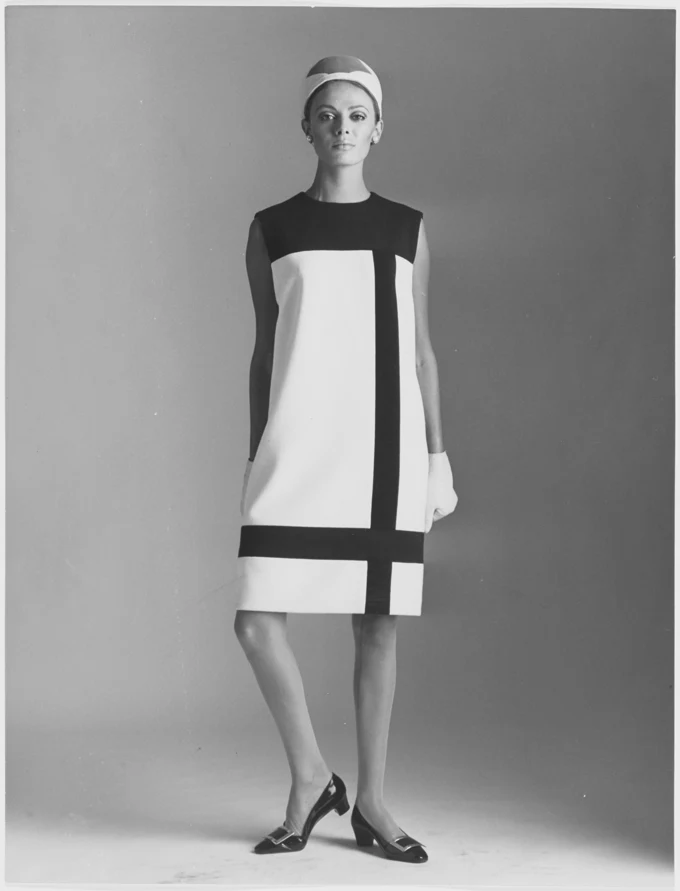
This changes how we read the dress. The black line that seems simply to organise the colours also helps shape the garment. The image has to meet a body with volume, proportions, and places to get in and out.
The encounter between fashion and art becomes especially interesting when we can see these decisions.
The phrase “a dialogue between fashion and art” tends to arrive ready-made in the press release. In the atelier, there are still a few details to resolve. Where should the seams go? Which material will hold? How do you preserve the drawing when the surface is no longer flat?
These are creative questions.
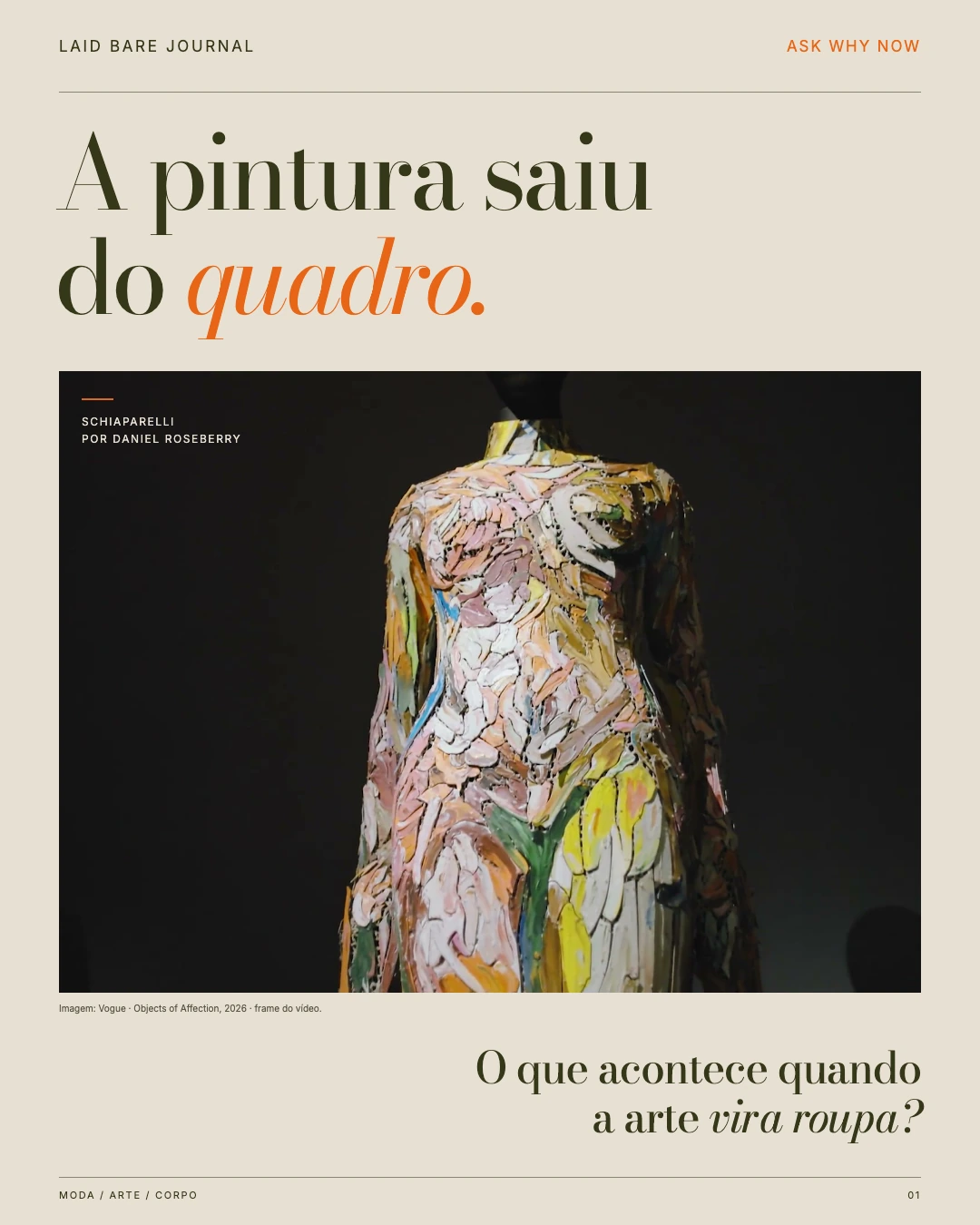
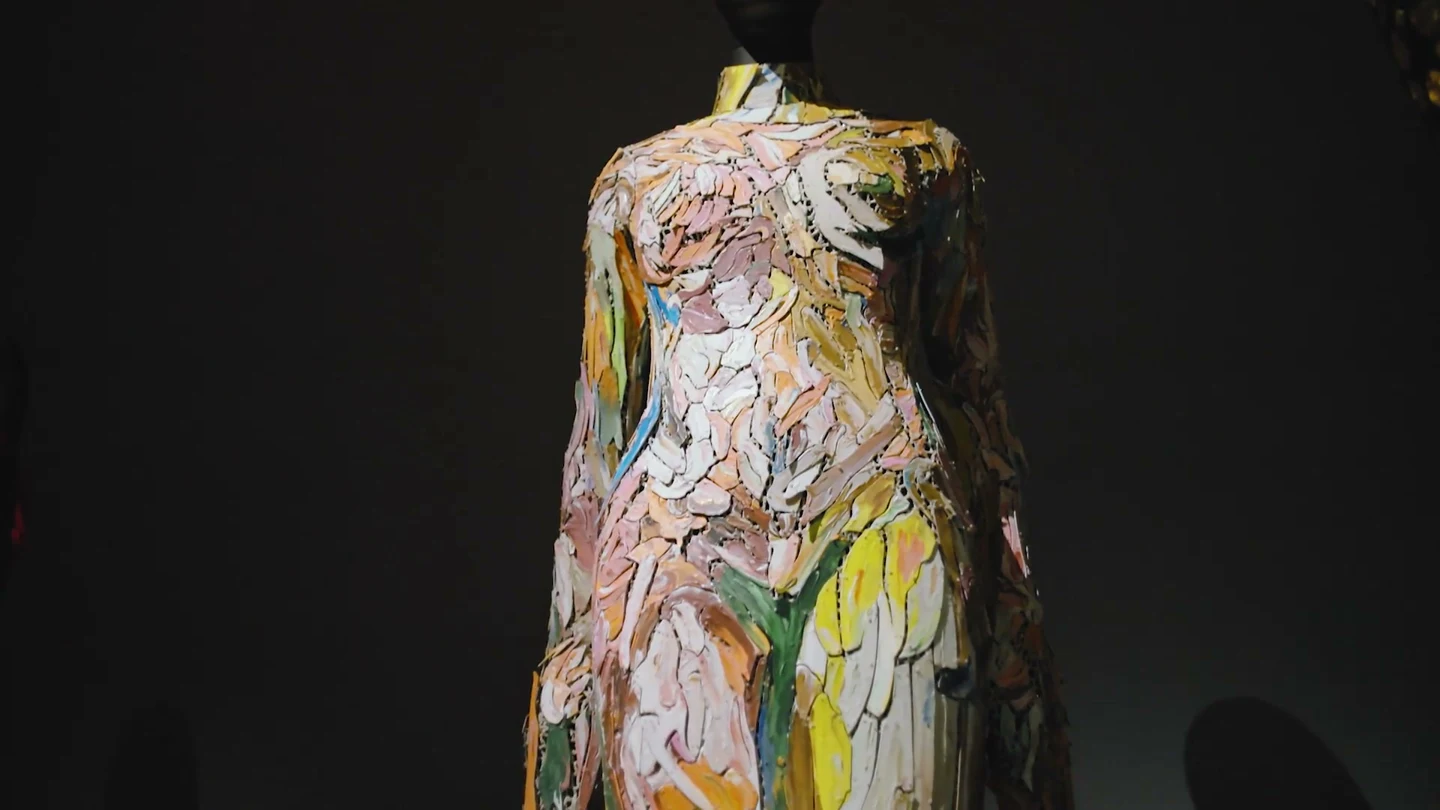
Saint Laurent found a way to organise clothing through geometry. At Schiaparelli, Daniel Roseberry found a way to construct brushstrokes.
In a Vogue video, the designer explains that he enlarged his anatomical paintings to human scale. The brushstrokes became painted Plexiglas pieces, arranged like a puzzle and embroidered onto a crochet base. Vogue ↗
The brush's gesture acquired thickness and points of attachment. For the painting to wrap around a body, someone had to devise how its parts would be made and joined.
This is translation through materials. Recognising the reference is only part of the experience; looking at its construction reveals another act of creation underway.
Sometimes that translation also transforms what objects mean.
In 1936, Salvador Dalí gave Elsa Schiaparelli a drawing of a human figure with drawers incorporated into its body. The proposal led to suits and coats presented in the winter 1936–1937 collection, with drawer-shaped pockets and buttons resembling handles. Schiaparelli ↗
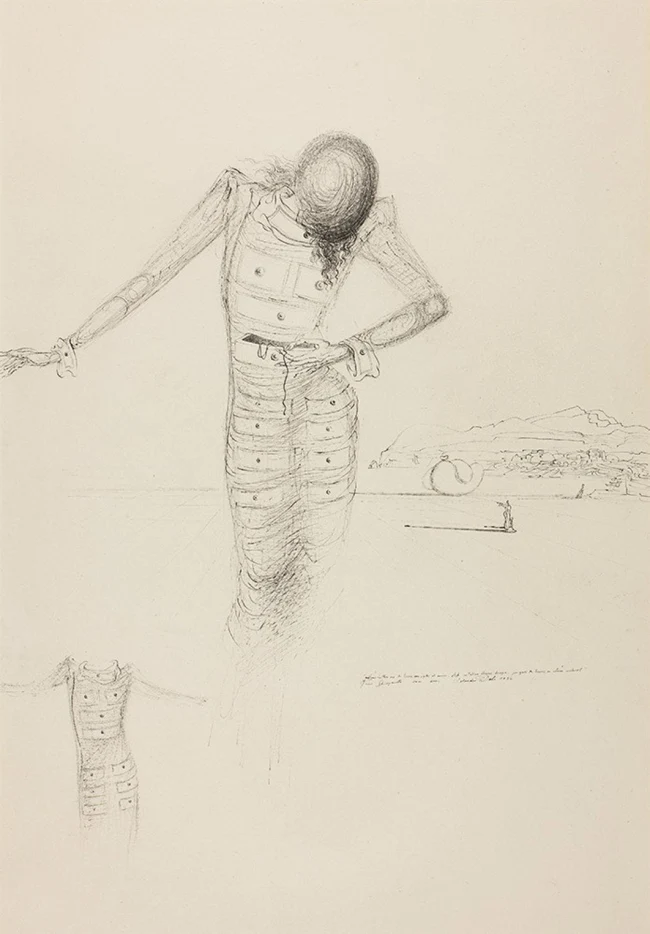
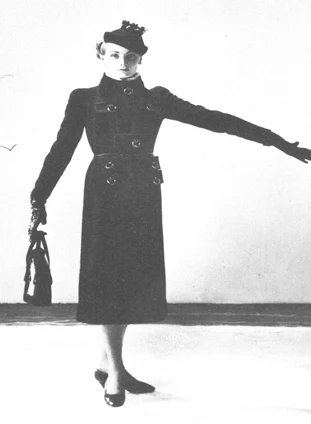
Drawers and pockets share a quiet affinity: both hold things. Dalí and Schiaparelli explored that connection until it became strange. The body began to suggest a piece of furniture with compartments.
This is one way to understand surrealist displacement: taking something out of its usual context and placing it in an unexpected relationship. The effect depends on recognition. We know what a drawer is; finding one on a garment briefly unsettles that certainty.
Tailoring gives the provocation a tangible presence.
With Jean Cocteau, Schiaparelli explored another possibility: an image that lets us see two things at once.
On the back of a 1937 coat, two profiles face each other. The space between them also outlines a vase of roses. The same contour supports both readings, while golden lines form a column below. V&A ↗
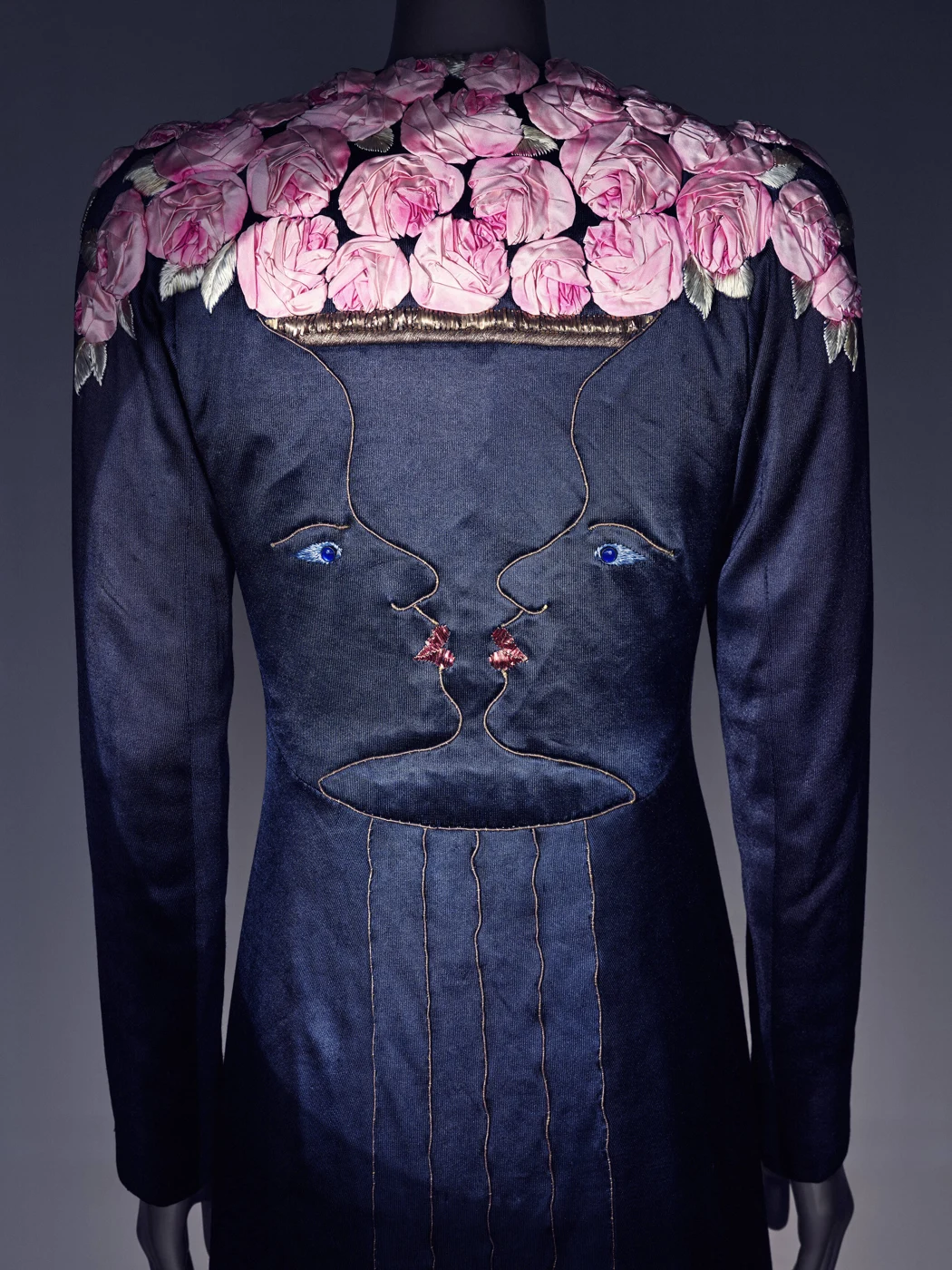
The drawing was realised through embroidery by Maison Lesage. Its lines found metallic thread capable of catching the light, and the flowers gained volume in silk. V&A — the coat in detail ↗
Here, the body participates in the composition itself. As curator Sonnet Stanfill observes, the illustration was sized to fit the wearer's back between the shoulders, with roses trailing delicately down the sides. Anatomy helps establish the drawing's scale and position. V&A — video, from 5:25 ↗
Placing it on the back also changes the viewer's experience. The image appears when the wearer turns or walks away. Someone can reveal it without even noticing that another person has just discovered two faces where they previously saw a vase.
The support becomes part of our encounter with the image.
This is the thread connecting such different creations. For Saint Laurent, the body demands a solution in pattern cutting. For Roseberry, it demands a structure to hold the brushstrokes together. With Dalí and Cocteau, it also affects meaning and the way we encounter the drawing.
The reference does not pass through this process unchanged. It acquires new conditions of existence: weight, relief, movement, and a relationship with the person wearing it.
Looking at these clothes this way takes us beyond identifying the artist being referenced. We can follow what had to be invented for an idea to become wearable, and see how much that passage transforms the original idea.
Then someone puts the garment on and takes it into a situation the drawing cannot entirely control. They sit, dance, cross a room. The clothes go with them.
A painting may end at the edge of the canvas. Where does a work end when someone wears it?