In 1965, Anni Albers published On Weaving, a foundational book on weaving. In its dedication, she acknowledged the weavers of ancient Peru as her great teachers.
An artist trained at the Bauhaus, a school whose name has become shorthand for modern design, was acknowledging her debt to makers who had worked centuries before her. The information was at the beginning of the book. It deserves to appear just as often in our accounts of modernity. Josef and Anni Albers Foundation — the dedication
To understand this encounter, it helps to begin far from Germany.
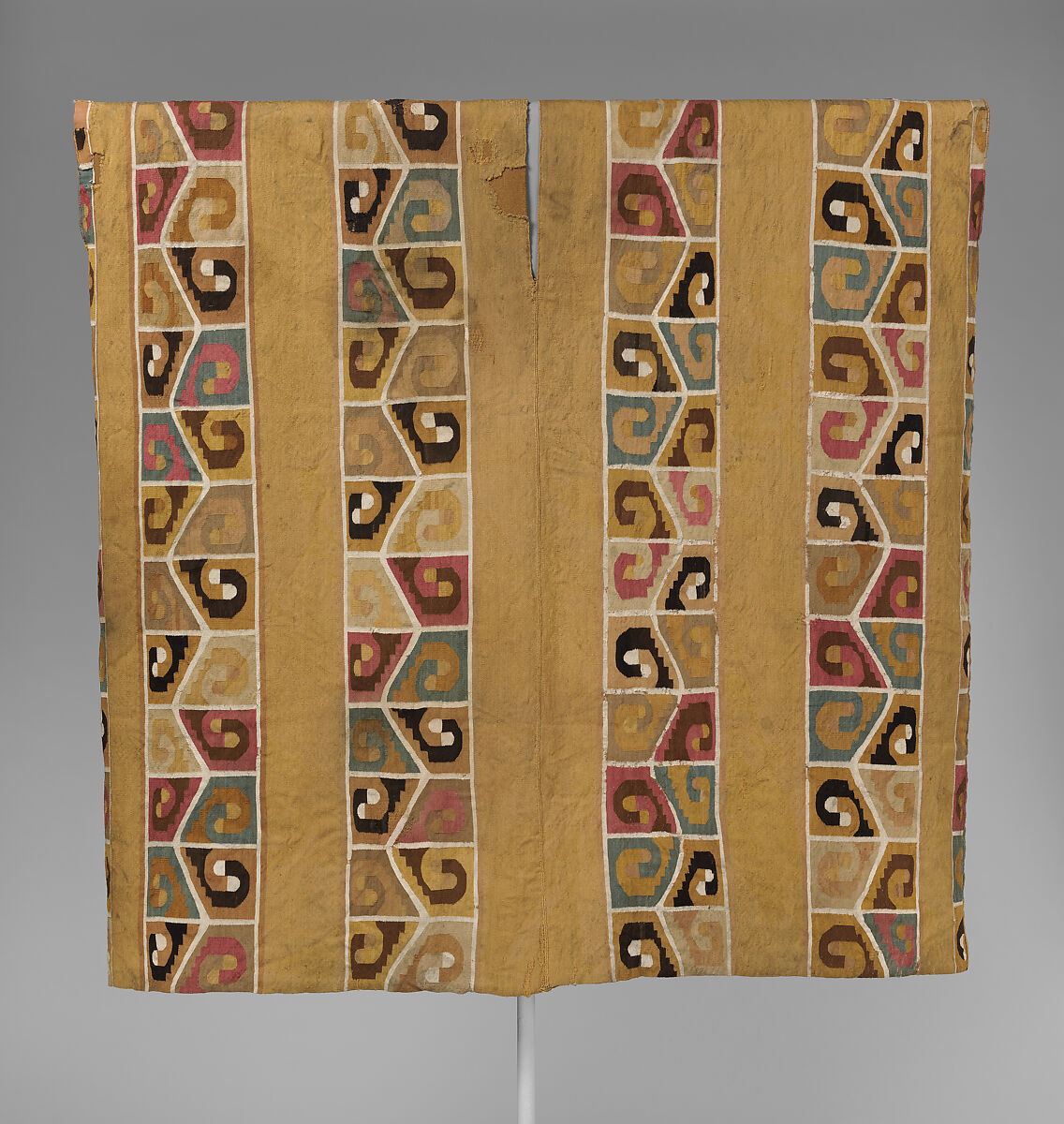
A Wari tunic dating from the seventh to ninth century, now at the Metropolitan Museum, arranges stepped motifs in vertical bands. Pink, magenta, turquoise and brown create a remarkably precise composition. The garment also communicated social standing: the exceptional quality of its weaving made its wearer’s prestige recognisable.
The exact meaning of the motif remains unknown. The museum’s record admits this — a useful reminder that admiring an object does not give us permission to invent its history. The Met — the tunic and its context
The design happens inside the cloth
This kind of constructive intelligence interested Albers.
In a textile, the image can emerge from the interlacing itself. The threads that hold the piece together also organise its colours, rhythms and forms. Designing means deciding how that structure will exist.
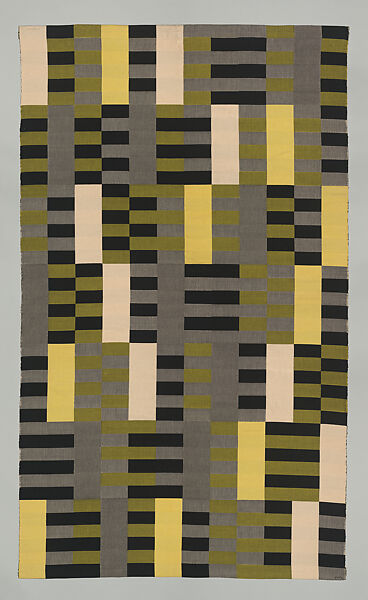
Scholar Elissa Auther explains that at the Bauhaus in Dessau, Albers and other weavers studied Andean structures with multiple layers. Their investigation concerned how the cloth was constructed, alongside its visual motifs. Albers’s double and triple weaves belong to this history of technical translation. Elissa Auther — research on the Andean connections
How a composition takes shape on the loom
A history with more than one address
This relationship changes the way we tell the story of modern art. Some of its investigations drew on knowledge that already had a long history in the Americas.
It also calls for care. Auther shows that European interest in non-European arts coexisted with a primitivist outlook: the work was admired while its makers were imagined as intuitive beings, distant from the intellectual deliberation attributed to the modern artist. Read the historical analysis
A convenient division. On one side, someone “follows tradition”. On the other, someone studies the result and gets to call it research.
Albers’s dedication offers a way to interrupt that assumption. Recognising her teachers means taking seriously the knowledge they produced, with its own history and complexity.
The loom is still at work
This history reaches the present through people who continue to make textiles and pass on their knowledge.
In a video recommended by the Saint Louis Art Museum, Aymara weavers Jessica García, Simona Choque, Juana Flores Mamani and Albina Choque demonstrate spinning and weaving and discuss learning. They are contemporary artists in their own context — not a reconstruction of Albers’s past. Saint Louis Art Museum — context and resources
Knowledge passed on by those who weave
After this journey, looking at a textile asks a little more attention. How do its threads meet? How does a colour appear? What decisions make that form possible?
When a composition looks surprisingly modern, perhaps we should reconsider the surprise. The problem may lie in how little of the history we were taught.